There is a moment many parents recognize: their child is physically present, but their attention is somewhere else. A phone is in their hand, a game is running in the background, or they are checking what everyone else is doing online. What once felt like occasional screen use can gradually become the center of a child’s day.
After more than four decades of working with children, adolescents, and families in San Diego, I have watched childhood change in ways I have never seen before. Technology is not inherently bad, and screens are now part of everyday life. They can help children learn, connect, create, and explore. But the amount of digital stimulation children receive, and what that stimulation replaces, deserves our attention.
The question is not simply, “How much screen time is too much?”
A more important question may be: “What is the developing brain practicing every day?”
The Developing Brain Is Built Through Experience
Childhood and adolescence are periods of extraordinary brain development. The brain is constantly strengthening connections that are repeatedly used while allowing others to become less prominent. This process of neuroplasticity means that experiences matter.
Children develop attention by practicing sustained attention. They develop emotional regulation through repeated opportunities to experience frustration, recover, problem-solve, and connect with others. They develop social skills through face-to-face interaction, play, conversation, cooperation, and navigating disagreements.
Digital environments can provide some valuable experiences, but they can also encourage a very different pattern: rapid stimulation, constant novelty, immediate rewards, and frequent interruptions.
For a developing brain, that difference matters.
The Centers for Disease Control and Prevention has reported that many U.S. adolescents spend several hours each day using screens for recreational purposes. In 2024 data, teens reporting four or more hours of daily recreational screen time also reported higher rates of anxiety and depression symptoms than those reporting less screen time. These findings show an important association, although they do not prove that screen use itself caused those symptoms.
That distinction is important. A child struggling with anxiety, depression, ADHD, loneliness, or family stress may also turn to screens more often. The relationship can go in multiple directions.
What we do know is that excessive or problematic digital use can become part of a cycle that affects sleep, attention, mood, relationships, and daily functioning.
Attention Is Something Children Practice
One of the most overlooked effects of constant digital stimulation may be what it teaches children about attention.
Many online environments are designed to keep people engaged. Notifications, short-form videos, game rewards, social feedback, and endless scrolling provide frequent opportunities for novelty and reinforcement.
Real life works differently.
Reading a chapter of a book, completing homework, learning an instrument, building something, having a long conversation, or simply being bored requires a child to remain engaged without receiving a new reward every few seconds.
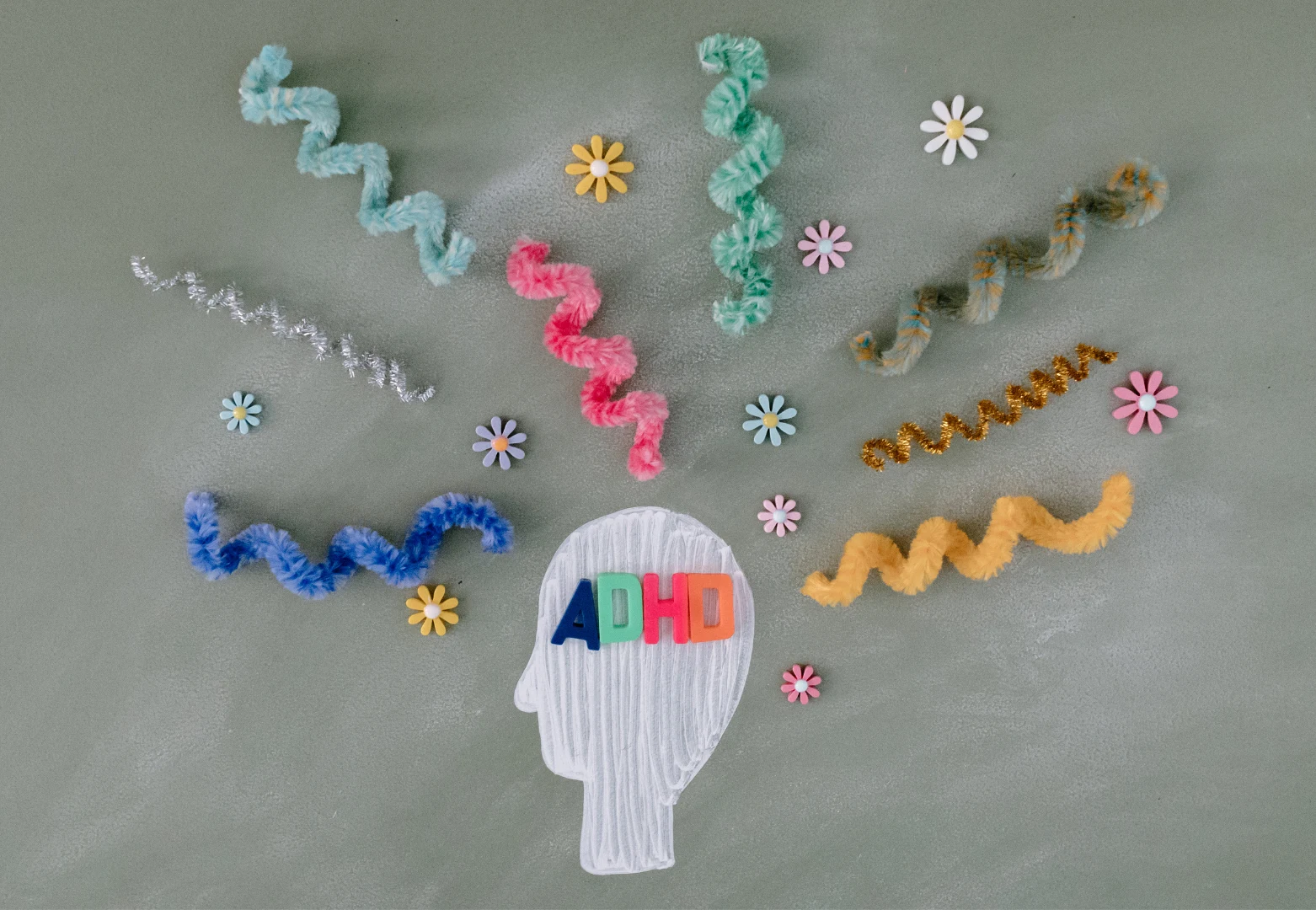
This is especially relevant for children who already struggle with attention or executive functioning. Technology does not cause ADHD, and children with ADHD should not be blamed for having difficulty putting devices down. At the same time, highly stimulating digital environments may make it harder for some children to practice sustained attention and self-regulation.
If you are noticing significant challenges with focus, impulsivity, organization, or emotional regulation, it is important to look at the whole picture rather than assuming the phone is the problem or that the child simply needs more discipline. Sleep, stress, learning differences, ADHD, anxiety, family dynamics, and a child’s overall environment can all influence attention.
At Healthy Within, we take this broader perspective because attention, sleep, emotional regulation, stress, learning, and nervous-system regulation are interconnected rather than isolated problems.
The Nervous System Needs More Than Stimulation
A child’s nervous system needs both activation and recovery.
Screens can be stimulating even when a child appears physically still. A fast-paced game, emotionally charged social media interaction, or stream of short videos can keep the brain engaged long after the device is put down.
Children also need experiences that allow their nervous systems to slow down: outdoor play, movement, quiet time, creative activities, face-to-face connection, and sleep.
This is one reason replacing screen time can be more effective than simply taking it away.
If a child loses three hours of gaming but has nothing meaningful to fill those three hours, the phone or game will remain the most rewarding option. Instead, parents can help make the offline world interesting again.
A younger child might benefit from outdoor play, board games, building projects, reading, sports, music, or imaginative play. Teenagers may benefit from cooking, volunteering, creative projects, spending time with friends in person, part-time work, or gaining more independence in the real world.
The goal is not to eliminate stimulation. It is to give the developing brain a wider range of experiences.
Social Media Changes the Social Environment
Social media allows children to connect, communicate, and find communities. For some young people, that connection can be meaningful.
But online interaction is different from face-to-face relationships.
Children and teenagers are still learning how to interpret facial expressions, tone of voice, body language, conflict, boundaries, and emotional cues. Those skills develop through real-world relationships.
Social media can also introduce comparison, social pressure, public feedback, and the feeling that one is constantly being observed. In 2025, Pew Research Center reported that nearly half of U.S. teens said social media has a mostly negative effect on people their age.
This does not mean social media affects every child in the same way. But it does remind us that children’s digital environments deserve the same thoughtful attention as their physical environments.
Parents can ask questions that go beyond how many hours a child spends online: How does your child feel after using social media? Are they sleeping? Are they comparing themselves to others? Are online interactions replacing friendships in the real world? Can they put the phone down without becoming extremely distressed?
Those answers can tell us much more than a screen-time number alone.
Start With Sleep
If a family wants to make one change, I often recommend looking at the bedroom.
Sleep is foundational for attention, learning, emotional regulation, and overall mental health. Phones can interfere with sleep not only because of light exposure but because they create opportunities for continued engagement: messages, videos, games, notifications, and the feeling that something might be happening online.
A simple household boundary can make a meaningful difference: keep phones and other stimulating devices outside the bedroom at night.
This gives the brain a clearer transition from stimulation to rest.
For teenagers who argue that they need their phones for an alarm clock, an inexpensive traditional alarm clock can remove one common obstacle. The goal is not punishment. It is creating an environment that supports the brain’s need for restorative sleep.
What About Gaming?
Gaming deserves a nuanced conversation.
Playing video games does not automatically mean a child has a problem. Games can provide enjoyment, challenge, creativity, social connection, and a sense of accomplishment.
The concern is when gaming begins interfering with important areas of life.
The World Health Organization recognizes Gaming Disorder as a condition involving impaired control over gaming, increasing priority given to gaming over other activities, and continued gaming despite negative consequences. This describes a pattern of significant impairment – not simply a child who enjoys playing games.
Parents can look at function rather than focusing only on hours. Is the child sleeping? Completing responsibilities? Participating in family life? Maintaining friendships outside gaming? Able to stop when asked? Still interested in other activities?
Those questions often tell us more than a number alone. If you are concerned about your child’s gaming habits and feel it is becoming an addiction, feel free to check out how neurofeedback can help regulate these symptoms.
What Can Parents Actually Do?
Parents do not need to create a completely technology-free childhood.
Instead, start by creating predictable boundaries around technology. Consider screen-free meals and family time. Keep devices out of bedrooms at night. Build regular opportunities for movement, outdoor time, reading, creativity, and face-to-face connection. When possible, delay giving children a smartphone with unrestricted internet access until they are developmentally ready to manage it.
It can also help to establish family rules before there is a conflict. Decide together when devices can be used, where they are charged at night, what happens during homework, and what activities are always screen-free.
And perhaps most importantly, model the behavior you want to see.
Children notice when adults are constantly checking their phones during conversations. Creating a healthier digital culture at home means that parents participate in it too.
It can also help to talk with other parents. When families work together, children are less likely to feel that their household is the only one with boundaries around technology.
Schools Can Help, But Childhood Happens Beyond School
Phone-free school policies can create valuable periods during the day when students are able to focus, interact, and learn without constant digital interruption.
But a school policy cannot address everything.
The larger question is what happens before school, after school, at dinner, in the bedroom, and during weekends. Creating healthier digital habits requires consistency across a child’s environment.
Parents can think of this as creating a healthy digital ecosystem, rather than simply enforcing a screen-time limit.
Can the Brain Rewire?
Yes, and that is the hopeful part.
Neuroplasticity does not only mean that repeated digital stimulation can shape the brain. It also means that new experiences can shape it.
When children spend more time sleeping, moving, reading, playing, creating, connecting, and engaging in meaningful challenges, they are practicing those patterns too.
This is why we do not have to approach today’s technology challenges from a place of fear. A child’s brain is continually adapting. We can help provide experiences that support healthy adaptation.
At Healthy Within, we sometimes use QEEG brain mapping to better understand patterns of brain activity when clinically appropriate. QEEG records electrical activity from the brain and can provide additional information when developing an individualized neurofeedback plan. It is not a standalone test for “screen damage,” ADHD, anxiety, or depression, and it should be considered alongside a person’s history, symptoms, functioning, sleep, and other relevant factors.
Neurofeedback may also be incorporated into care for some children and adolescents to support goals such as attention, regulation, and nervous-system functioning. Neurofeedback is a non-invasive training approach that uses real-time feedback to help individuals practice healthier patterns of brain activity. It is not a replacement for healthy sleep, appropriate boundaries, relationships, or environmental changes. Those pieces work together.
For children who are experiencing persistent attention difficulties, our ADHD and ADD resource provides additional information about how attention, executive functioning, sleep, and neurofeedback may fit into a broader approach to care.
We Don’t Have to Fear Technology
The goal is not to raise children who are afraid of technology.
Technology will be part of their education, careers, relationships, and daily lives. What we want to help children develop is something more valuable: the ability to use technology without being controlled by it.
That means learning when to engage and when to step away. Learning how to tolerate boredom. Learning how to have difficult conversations in person. Learning how to regulate emotions without immediately reaching for a screen.
Childhood does not need to be perfect to support a healthy brain. Small changes repeated consistently can matter.
Put the phone outside the bedroom. Have dinner without devices. Go outside. Let your child be bored. Read together. Create something. Talk. Play. Give them opportunities to solve problems without an algorithm solving the next moment for them.
The developing brain is remarkably adaptable.
That means the story of childhood and technology is not simply about what we may have lost. It is also about what we can choose to build next.
A Note for Parents Who Are Concerned
If you are noticing significant changes in your child’s attention, mood, sleep, behavior, or ability to regulate emotions, it can be helpful to look beyond screen time alone.
At Healthy Within, we believe that supporting a child’s brain means looking at the whole person. Depending on the individual, care may involve psychological support, lifestyle changes, brain mapping, neurofeedback, and other individualized strategies.
The goal is not simply to take something away from a child. It is to help create the conditions in which their developing brain can learn, regulate, connect, and thrive.
Healthy technology habits are not about going backward. They are about making sure childhood still has room for everything a developing brain needs.
If you’d like to learn more about neurofeedback and whether it may be appropriate for you or your child, contact Healthy Within to learn more about our approach and next steps.
At Healthy Within, we do not diagnose or medicate our patients. Instead, we use information about individual brain activity and goals to help develop individualized neurofeedback protocols.

Resources and Further Reading
Centers for Disease Control and Prevention (CDC). Associations Between Screen Time Use and Mental Health Symptoms Among US Adolescents.
Data examining recreational screen use and mental health symptoms among U.S. adolescents.
Xiao, Y., et al. (2025). Addictive Screen Use Trajectories and Suicidal Behaviors, Suicidal Ideation, and Mental Health in US Youths. JAMA Network Open.
A longitudinal study examining patterns of addictive social media, mobile phone, and video game use and their associations with mental health and suicide-related outcomes. JAMA Network Open study
Pew Research Center. (2025). Teens, Social Media and Mental Health.
Survey data from U.S. teens ages 13–17 examining perceptions of social media and its effects on mental health, sleep, friendships, and productivity. Pew Research Center report
World Health Organization Regional Office for Europe. (2024). Teens, Screens and Mental Health.
Findings from the Health Behaviour in School-aged Children study, including trends in problematic social media use and gaming among adolescents. WHO report
World Health Organization. Gaming Disorder.
Information on Gaming Disorder as defined within the ICD-11, including impaired control over gaming and continued gaming despite negative consequences. WHO Gaming Disorder information
American Academy of Pediatrics. Center of Excellence on Social Media and Youth Mental Health.
Evidence-informed resources for parents, healthcare professionals, educators, and young people navigating social media and digital technology. AAP Center of Excellence
American Academy of Pediatrics. Media and Children.
Guidance for families on developing healthy media habits while considering children’s developmental stages and individual needs.
Haidt, Jonathan. (2024). The Anxious Generation: How the Great Rewiring of Childhood Is Causing an Epidemic of Mental Illness. Penguin Press.
Explores the shift from a play-based childhood toward a phone-centered childhood and its potential implications for adolescent development.